- All
- Product Name
- Product Keyword
- Product Model
- Product Summary
- Product Description
- Multi Field Search
Views: 645 Author: Site Editor Publish Time: 2026-04-20 Origin: Site
Smartphone packaging in 2026 is no longer just a protective shell. It has evolved into a strategic brand touchpoint that communicates sustainability commitments, design philosophy, and cultural identity before the consumer ever powers on the device. The global top five smartphone manufacturers — Apple, Samsung, Xiaomi, vivo, and OPPO — are leading this transformation, each pushing packaging innovation in distinct directions. This article decodes the latest packaging design trends across these industry giants and what they reveal about the future of consumer electronics packaging.

Apple continues to set the gold standard for premium minimalist packaging. As of 2025, the company has achieved a landmark sustainability milestone: 100% plastic-free packaging across all product lines. All Apple products now ship in fiber-based packaging that consumers can easily recycle at home, a goal the company met ahead of its 2025 target-. The transition has been comprehensive — Apple engineers have replaced plastic screen films and internal trays with responsibly sourced fiber paper, and even redesigned large product boxes like the Studio Display XDR package to be foldable for easier recycling-.
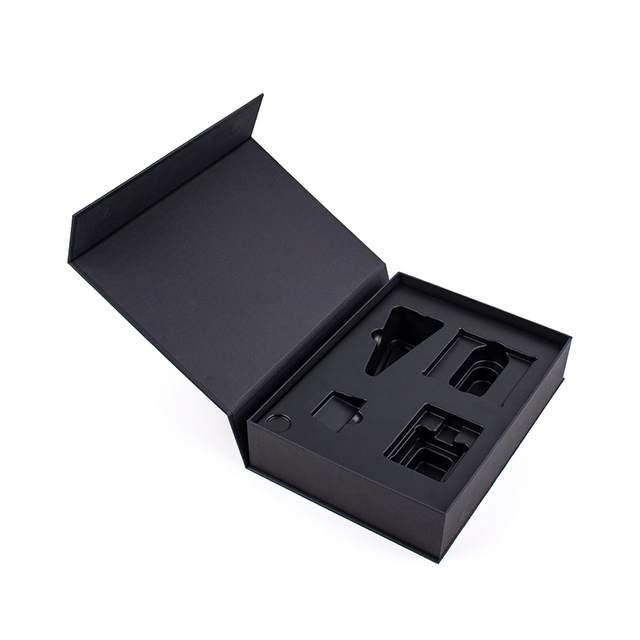
The visual language remains unmistakably Apple: a seamless white rigid box with the iconic bitten-apple logo, embodying a meticulous balance of minimalism and luxury. Internally, molded pulp inserts — often made from bamboo and bagasse fibers — provide superior shock absorption while eliminating disposable plastic cushioning-14. Apple's approach demonstrates that premium unboxing experiences can coexist with aggressive environmental goals, establishing a blueprint the rest of the industry now follows.
Samsung has matched Apple's sustainability ambition with tangible results. The Galaxy S25 series, released in 2025, features a packaging box made entirely from 100% recycled paper — a move that earned Samsung the 2025 Design for Recycling® Award from the Recycled Materials Association (ReMA), the highest honor for sustainable product design. This recognition underscores Samsung's commitment to integrating circular economy principles into mass-market flagship devices.
The Galaxy S25 packaging extends beyond the outer box. For the first time, recycled materials have been incorporated into every external component of the device itself, including the armor aluminum frame, ensuring that at least one recycled material appears in every external part-. Samsung's packaging philosophy merges technical performance with environmental stewardship, proving that sustainability can scale to tens of millions of units without compromising brand identity or product protection.
Xiaomi has carved out a distinctive position through structural innovation rather than material substitution alone. Its "One Paper Box" design concept — which builds an entire package from a single sheet of cardboard or corrugated paper without adhesives or supplementary internal supports — received a Red Dot Design Award in 2026. The design eliminates plastic entirely, reduces material consumption, and requires less manual labor and assembly work, enabling cost-efficient manufacturing alongside environmental benefits.
Beyond structural ingenuity, Xiaomi integrates cultural narratives into its packaging. The brand has released limited-edition "Chinese style" packaging featuring black backgrounds adorned with traditional motifs, blending local heritage with contemporary minimalism. This cultural dimension adds emotional resonance to an otherwise utilitarian object, transforming packaging into a storytelling medium that resonates particularly well in Xiaomi's home market and across Asia.
vivo secured the fourth position globally in 2025, driven by strong performance in India and a refined product portfolio that emphasizes high-value upgrades and mid-range stability. While vivo's packaging innovations are less widely documented in English-language sources, the brand's approach aligns with broader industry shifts toward fiber-based trays and RFID anti-counterfeit labels. vivo's packaging reflects the company's premiumization strategy — clean lines, subdued color palettes, and an emphasis on tactile quality that signals value without ostentation. As vivo continues to expand beyond Asia, its packaging will likely evolve to meet stricter international sustainability regulations while maintaining the understated elegance that defines its brand identity.
OPPO rounds out the global top five with a packaging approach that emphasizes tactile luxury and material richness. The Find X series has long incorporated leather-like finishes, a tradition that continues with the Find X9 Ultra's "Tundra Moss" colorway, inspired by Hasselblad's Earth Explorer limited edition and Nordic tundra landscapes-. The new-generation leather material draws inspiration from camera grip design, offering both slip resistance and durability, while signature Hasselblad orange accents appear around the camera module and function keys.
OPPO's broader sustainability framework follows a "3R+1D" principle (Reduce, Reuse, Recycle, plus Degradable). Since 2019, the company has reduced plastic usage in packaging by 95%, with approximately 45% of materials now sourced from recycled fiber and any remaining plastic converted to biodegradable PLA. OPPO demonstrates that premium texture and sustainability are not mutually exclusive — they can, and should, reinforce each other.
Analyzing these five brands reveals four macro-trends that will define digital product packaging through 2026 and beyond:
1. Fiber-Based Materials Are the New Default. Paperization — the shift toward paper-based alternatives — has become the industry standard. Molded pulp inserts are rapidly replacing expanded polystyrene (EPS) and plastic cushioning, driven by both consumer preference and regulatory pressure. The global molded pulp inserts market is projected to grow from $980 million in 2025 to $1.78 billion by 2036, with electronics accounting for the largest end-use segment.
2. Minimalism Remains King — But With Tactile Depth. Clean, uncluttered exteriors continue to dominate across all five brands. However, the best designs now incorporate subtle textural elements — micro-embossing, matte coatings, or premium paper finishes — that reward touch without adding visual noise. The unboxing experience in 2025 is choreographed: a thumb notch that catches cleanly, a dust flap that releases smoothly, interior printing that greets at the right angle.
3. Unboxing as Orchestrated Theater. Packaging is now deliberately designed for social media. Minimalist boxes photograph beautifully in unboxing videos, driving organic brand exposure. Apple's magnetic-closure rigid boxes, Samsung's layered internal trays, and Xiaomi's single-sheet folding mechanisms each create moments of discovery that consumers instinctively share online.
4. Smart Packaging Enters the Mainstream. RFID tags, QR codes linking to digital experiences, and battery-free smart sensors are transitioning from novelty to standard practice. Huawei has experimented with AR-enabled instructions that activate when users scan packaging patterns. As regulations like the EU's Digital Product Passport mandate greater traceability, connected packaging will become a compliance requirement rather than a differentiator.
With Apple and Google already achieving 100% plastic-free packaging and Samsung rapidly approaching the same milestone, the industry's next frontier lies beyond material substitution. Expect to see:
Carbon-negative packaging: Materials that actively sequester carbon during production.
Mono-material systems: Entire packages made from a single material type for seamless recycling.
AI-optimized packaging design: Machine learning algorithms that balance protection, material usage, and shipping efficiency for each SKU.
Cultural customization at scale: Regional variants that resonate with local aesthetics while maintaining global brand coherence.
From Apple's iconic white box to Xiaomi's single-sheet ingenuity, the world's leading digital brands have transformed packaging into a competitive advantage. The lessons are clear: sustainability is now non-negotiable, minimalism drives premium perception, and every unboxing moment is a branding opportunity. For businesses across all sectors, these five giants offer a masterclass in how to package not just a product, but a promise.
Ready to elevate your own packaging strategy? Whether you're launching a consumer electronics product or refreshing an existing line, the principles demonstrated by Apple, Samsung, Xiaomi, vivo, and OPPO provide a proven roadmap. From sustainable material selection to structural innovation and unboxing choreography, the opportunity to differentiate through packaging has never been greater.