- All
- Product Name
- Product Keyword
- Product Model
- Product Summary
- Product Description
- Multi Field Search
Views: 491 Author: Site Editor Publish Time: 2025-12-04 Origin: Site
In the modern jewelry industry, custom jewelry boxes are not only used to protect jewelry but also to enhance brand image and improve customer experience. With the rapid development of Artificial Intelligence (AI) technology, the process of designing custom jewelry boxes has become more intelligent and efficient. AI software can quickly meet customer needs, enhance creativity, and improve production efficiency. By leveraging AI tools, jewelry box designs can be more precise, innovative, and in line with market trends. This article will explore how to use AI software to design custom jewelry boxes and enhance design efficiency and creative potential.

The use of AI in jewelry box design has significantly increased the flexibility and efficiency of the design process. Compared to traditional design methods, AI tools can quickly generate multiple design options and make personalized adjustments based on customer needs. Some key advantages of AI tools include:
Faster Design Iteration: AI can generate multiple design options in minutes, significantly shortening the design cycle.
Personalized Customization: AI can analyze customer preferences, brand features, and jewelry box functionality to offer highly personalized designs tailored to different consumers.
Data-Driven Optimization: AI can learn from large datasets to automatically optimize jewelry box designs, ensuring a perfect balance between aesthetics and functionality.
Several AI software tools are widely used in jewelry box design. Here are some of the most popular tools:
AutoCAD and Fusion 360: These 3D modeling software tools utilize AI to precisely draw jewelry box designs and simulate material effects, helping designers better showcase final designs.
Adobe Illustrator (AI Plugins): Adobe’s AI plugins help designers generate patterns, textures, and other decorative elements to enhance the artistic appeal and branding of jewelry boxes.
Rhino: A 3D modeling software for jewelry and industrial design, Rhino incorporates AI technology to efficiently create complex jewelry box models.
AI software can collect and analyze customer preferences, market trends, and functional requirements to generate personalized design solutions. By analyzing customer browsing history, purchase habits, and social media activity, AI can identify specific needs and provide customized design suggestions.
Style Analysis: AI can analyze customer preferences to identify popular jewelry box styles, such as luxury, minimalist, or vintage, helping designers offer the most suitable design options.
Functional Requirements: AI can suggest interior designs, dimensions, and features based on the type of jewelry and storage needs, such as the choice of lining materials or the number of drawers.
AI design software can automatically generate various creative design solutions. Designers only need to input basic information such as jewelry box size and material preferences, and AI will offer multiple design ideas. Designers can modify and adjust these suggestions to create a final design.
Patterns and Textures: AI can create unique patterns and textures based on the brand’s style and market demand to enhance the visual appeal of the jewelry box.
Color Matching: AI can recommend the best color combinations based on popular trends or the jewelry’s color, ensuring that the jewelry box is aesthetically pleasing.

The choice of materials plays a significant role in the appearance and durability of a jewelry box. AI tools can recommend the most suitable materials based on the design, taking into account factors such as aesthetics, functionality, and sustainability:
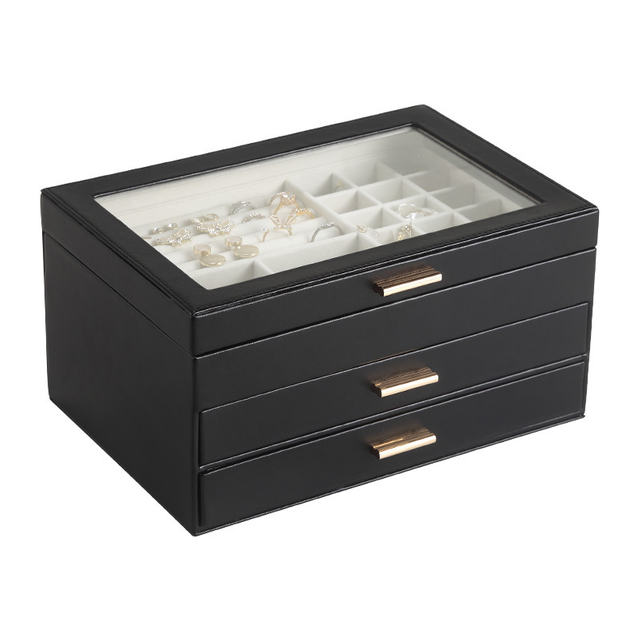
Leather and Metal: AI can suggest combining leather and metal for high-end jewelry boxes, providing a luxurious yet sturdy design.
Wood and Velvet: For classic jewelry boxes, AI may recommend using wood with velvet lining to enhance the texture and protect the jewelry.
Eco-Friendly Materials: With the growing emphasis on sustainability, AI can suggest eco-friendly materials, such as bamboo exteriors or recycled leather, to meet the demand for sustainable products.
AI tools can help designers combine various materials to create unique jewelry box designs. For example, AI can suggest combining transparent glass, metal, leather, and wood, offering more creative options for jewelry box designs. This combination of materials not only enhances the jewelry box's visual appeal but also increases its uniqueness and market competitiveness.
Using AI-powered 3D modeling software, designers can quickly convert jewelry box designs into virtual models and simulate their appearance. Through 3D modeling, designers can:
Simulate Material Effects: AI can simulate how different materials will look under different lighting conditions, helping designers preview the jewelry box’s appearance virtually.
Check Structural Integrity: AI can test the stability of the jewelry box’s structure, ensuring that it effectively supports the jewelry’s weight and that the design is both aesthetically pleasing and functional.
Through virtual testing, designers can identify potential issues early on and use AI’s optimization suggestions to make adjustments. For example, AI can recommend adding extra support to the jewelry box's structure or modifying its closure design to improve safety and functionality.
AI can not only assist with the design but also optimize the manufacturing process. By integrating AI with automated production systems, jewelry box designs can be precisely manufactured, ensuring that every detail meets the designer’s specifications:
Automated Cutting and Polishing: AI can guide machinery to automatically cut and polish materials, ensuring that each component of the jewelry box adheres to design requirements.
Quality Control: AI can monitor the production process in real-time, ensuring that the jewelry box's appearance, structure, and functionality meet quality standards.
Using AI software to design custom jewelry boxes not only improves design efficiency but also enhances personalization and creativity. With AI's automated design generation, personalized recommendations, material matching, and production optimization, jewelry box designs become more precise and innovative. AI tools will help jewelry brands stand out in the competitive market while improving the customer shopping experience. If you want to elevate your jewelry box designs, utilizing AI software will provide you with more possibilities and advantages.